Written by Kenedy A. Foryoung, MD.
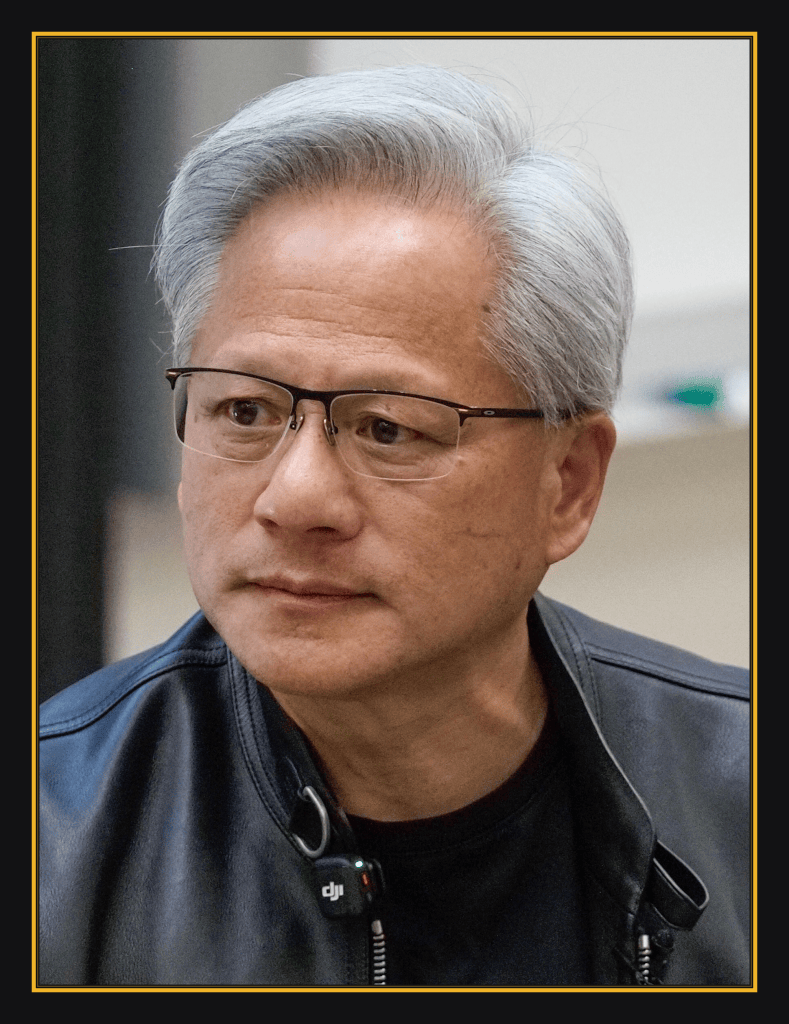
Nvidia’s board has opened an independent investigation into its own chief executive, after New York Times reporting that U.S. intelligence agencies believed Jensen Huang had been the target of a Chinese intelligence operation. Huang has admitted to an extramarital affair with Alice Huang, a Chinese businesswoman who is no relation, and has apologized to his family and employees. China calls the spying allegation a smear. Here is what is established, what remains allegation, and what it means for the company at the center of the AI boom.
What is established
Nvidia’s board announced the independent investigation on Sunday, November 8, saying it has “no reason to believe that either national security or NVIDIA secrets were compromised.” Longtime Silicon Valley lawyer Stephen Neal has been named the board’s lead independent director, and the company hired law firm Wachtell, Lipton, Rosen & Katz, with former U.S. Attorney Joon Kim leading the probe. Nvidia says Huang remains CEO and is cooperating fully.
In an email to employees that Sunday, Huang wrote: “I was unfaithful to my wife. My actions hurt her and our children. There is no excuse for what I did. I am deeply sorry.” He added that he supports the investigation and is committed to protecting Nvidia and America’s national security.
President Trump said Monday that he had spoken with Huang, that Huang denied knowing the woman was a spy, and that the FBI is looking into the matter. Three Republican House committee chairs have asked Huang to sit for a closed-door briefing on November 18, one day after Nvidia reports quarterly earnings, and Democratic leaders have separately called for investigation. A shareholder class action has been filed in federal court in San Jose, accusing Nvidia and Huang of false or misleading statements.
China’s foreign ministry rejected the spying claim. Spokesman Guo Jiakun called it “groundless” and “nothing but a smear against China.”
What remains allegation
The core claim comes from U.S. intelligence assessments described in New York Times reporting over the past two weeks: that China’s Ministry of State Security recruited Alice Huang to gather information about American AI chips and potentially to influence Nvidia to push for its most advanced chips to reach China. No charges have been filed, no court has ruled, and her current whereabouts are unknown.
Alice Huang was an executive at Megaspeed, a Singapore-based data center company, from March to November 2023. Megaspeed bought nearly $5 billion of Nvidia chip technology and is under investigation by the Singapore government over suspicions it helped divert Nvidia chips to China. Nvidia says those earlier concerns were investigated and debunked. This week The Information reported that roughly $7.5 billion in Nvidia chips, about 240,000 units, reached China since 2023 through a network tied to Megaspeed and related companies. That figure comes from unnamed sources, and Nvidia has not confirmed it.
The Times also reported that Trump was briefed on the relationship last year and took no action at the time. Secretary of State Marco Rubio had overseen a memo warning the administration about the relationship.
The market reaction, in context
Nvidia stock fell 4.3% on Monday, November 9, to $178.67, erasing about $190 billion in market value. It was the only decliner in the 30-stock Philadelphia Semiconductor Index, which rose about 7% that day. Shares fell again on Tuesday, closing at $168.89, down 5.5%.
Analysts tied Monday’s underperformance directly to the news. The concerns are key-person risk around a CEO who is synonymous with the company (he is its fifth-largest shareholder, with a roughly 3.6% stake, and dozens of executives report to him directly) and the possibility of a lasting governance discount if leadership, export approvals or regulatory compliance come into doubt.
Context matters, though. Nvidia shares were already down about 23% over the prior month on worries about an AI bubble and a post-midterm selloff in tech. Analysts attributed Monday’s divergence to the scandal rather than a sector-wide judgment: Briefing.com’s Patrick O’Hare said the stock was being penalized for Huang’s personal transgression, and that the market did not expect a systemic domino effect. Rivals such as AMD and Broadcom rallied on the same day Nvidia fell. The next checkpoints are November 17, when Nvidia reports earnings, and November 18, the requested House briefing.
Why it matters
Export controls now sit at the center of the story. If investigators find that restricted chips did flow to China through this network, expect tighter rules and closer scrutiny of Nvidia’s customers in China and Southeast Asia. If the investigation clears the company, the episode still shows how exposed the AI supply chain’s most important company is to the personal conduct of one person.
It is also a reminder that so-called honeypot operations, where intelligence services cultivate personal relationships to reach powerful targets, are a documented technique. The lesson for the industry is not that one executive stumbled. It is that the companies building the future of AI are now treated as strategic terrain by the world’s intelligence agencies, and they will be governed that way.
A note on interpretation
An internal investigation, an FBI inquiry and congressional interest are processes, not verdicts. The most serious claims in this story remain allegations, and both Nvidia and China deny any breach. What is not in dispute is narrower: Nvidia’s CEO admitted the affair, his board is investigating, and the fallout for the company and its stock has begun.
Sources
- BBC: What we know about the affair and the investigation
- NPR: Nvidia launches investigation
- CNBC: Congress scrutiny and the board probe
- CNBC: Monday’s stock reaction
- CNA: Why Nvidia missed the tech rebound
- AP: Questions about Nvidia’s future
- The Verge: The MSS recruitment reporting
- Yahoo Finance: The Information’s $7.5B chip report
- Yahoo Finance: Monday’s drop and the prior-month slide
- Nvidia investor relations: NVDA quote


Leave a Reply